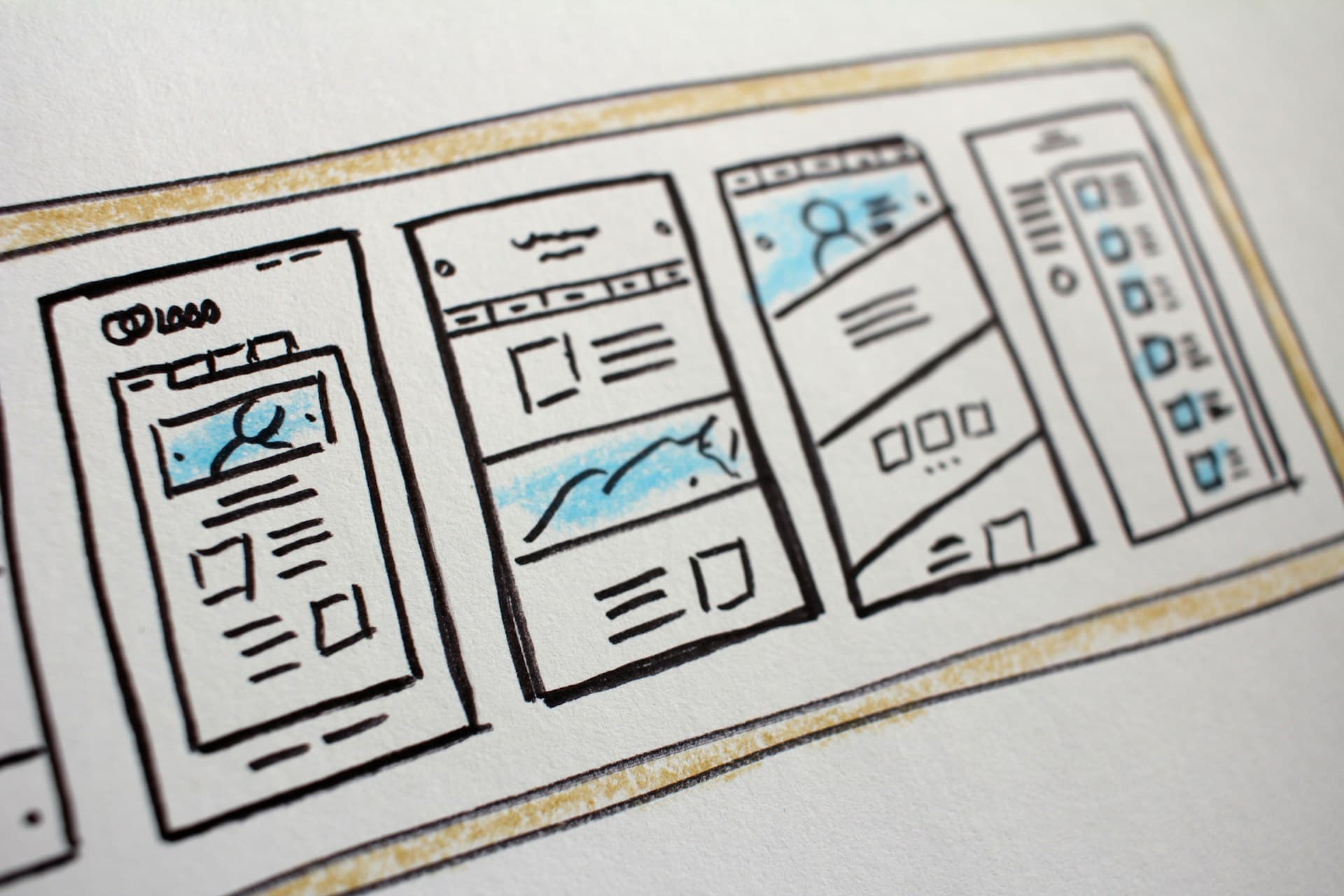
You're not alone if you've ever revisited a website you built 6 months ago and thought, "Why did I use three different shades of blue?" It's one of those lessons most web designers learn the hard way, and it's exactly why a web style guide isn't just a nice-to-have. It's essential.
What Exactly Is a Web Style Guide?
A web style guide is a document that defines the visual and functional rules for your website. Think of it as the single source of truth for how your site looks, feels, and communicates. It covers everything from your color palette and typography to your button styles, spacing rules, and even the tone of your copy.
It's the difference between a website that feels intentional and one that feels like it was designed by five different people on five different days (even if that person was just you, at different times).
Why Most Designers Skip It (And Why That's a Mistake)
When you're excited to start a new project, sitting down to write a style guide feels like doing the dishes before a party. You just want to get building.
But here's the thing: skipping the style guide doesn't save you time. It costs you time.
Here's where that debt shows up:
Inconsistency creeps in. You pick a font size for your H2 headings early on, then forget it two weeks later and eyeball a different one. Now you have two slightly different H2 sizes living on the same site. Handoffs become painful. If you ever bring in another designer, developer, or content creator, they have no reference point. They're guessing, and guessing leads to inconsistency.
Redesigns take longer. Without documented design decisions, you have to reverse-engineer your own site to figure out what's what before you can change anything. A style guide forces you to make intentional decisions upfront, so you're not making, and remaking, them constantly throughout the project.
The Core Elements of a Web Style Guide
Every style guide will look a little different depending on the project, but there are a few foundational elements that every one should include.
-
Color Palette
Define your primary, secondary, and accent colors, along with any background and text colors. Document them in every format you'll be using: HEX, RGB, and HSL. More importantly, define how each color is used. Which one is for CTAs? Which is for hover states? Which is strictly for destructive actions like delete buttons?
:root {
  --color-primary: #3a86ff;
  --color-secondary: #8338ec;
  --color-accent: #ff006e;
  --color-bg: #ffffff;
  --color-text: #1a1a2e;
}
Having these as CSS custom properties means your style guide isn't just documentation, it's functional code.
-
Typography
Typography decisions have an enormous impact on readability and brand perception. Your style guide should define your font families, the full type scale you'll use, font weights, line heights, and letter spacing.
Headings: "Inter", sans-serif
Body: "Georgia", serif
Code: "Fira Code", monospace
H1: 2.5rem / 700 H2: 2rem / 600 H3: 1.5rem / 600 Body: 1rem / 400 / line-height: 1.7List the values and document the reasoning too. Why did you choose a serif for body text? Why does your H1 use a heavier weight? These notes will save you when you revisit the project months later.
-
Spacing and Layout
Inconsistent spacing is one of the most subtle ways a website can feel "off" without visitors being able to pinpoint why. Define a base spacing unit and a scale derived from it.
Base unit: 8px
Scale: 8 / 16 / 24 / 32 / 48 / 64px
Max content width: 720px
Max site width: 1200px
Stick to the scale. If you find yourself reaching for a one-off value like 13px or 22px, that's a signal to revisit your scale, not break it.
-
UI Components
This is where your style guide starts to feel like a component library. Document the visual rules for every repeating UI element on your site:
Buttons: primary, secondary, ghost, and disabled states
Forms: input fields, labels, error states, focus styles
Cards: how content is contained, spaced, and shadowed
Navigation: active states, hover behavior, mobile treatment
Alerts and Badges: colors and icons for success, warning, error
For each component, include the visual rules and the interaction states. A button that looks great at rest but has no visible focus state is an accessibility problem waiting to happen.
-
Imagery and Iconography
Define the rules for how images are used on your site. Are they always full-width? Do they use a consistent aspect ratio? Do you apply a color overlay or filter to keep them on-brand? What icon library are you using, and at what sizes?
These decisions matter more than most people realize. Inconsistent image treatment is one of the fastest ways to make a polished design feel amateur.
-
Voice and Tone
A style guide isn't purely visual. The words on your site are just as much a part of your brand as the colors and fonts. Define the voice of your site: is it professional and formal? Conversational and direct? Witty and casual?
Also distinguish between voice and tone. Your voice stays consistent, but your tone shifts with context. The tone of a 404 error page should be lighter than the tone of a privacy policy.
Style Guides Aren't Just for Big Teams
There's a common misconception that style guides are only necessary when multiple people are working on a project. That's simply not true.
As a solo designer or developer, your style guide is a contract you make with your future self. Two months into a project, you will forget why you made certain decisions. 6 months in, you'll forget what decisions you even made. A style guide is the antidote to that.
It also signals professionalism. When a client can see a well-documented style guide for their project, it builds confidence. It shows that you're designing with intention, not just by intuition.
Treat It as a Living Document
One of the most important things to understand about a style guide is that it's never truly "done." Your site will evolve, your brand will mature, and new components will be added. Your style guide should evolve with it.
The worst thing you can do is create a thorough style guide at the start of a project and then never touch it again. An outdated style guide is almost worse than no style guide, because it creates confusion about what's current and what's been superseded.
Build the habit of updating your style guide whenever you make a meaningful design decision. Treat it like documentation in a codebase: if the change isn't reflected in the guide, it doesn't really exist.
Where to Keep It
There's no single right answer here, but a few approaches work well depending on the scale of your project:
- A Markdown file in your repo: Simple, version-controlled, and always close to the code. Great for smaller projects.
- A /style-guide route on your site. A living style guide that renders your actual components in context. More work to set up, but incredibly useful in the long run.
- A design tool like Figma. Ideal if your style guide needs to live alongside mockups and prototypes.
- For most projects, a combination works best: design tokens and component rules documented in code, and visual references maintained in a design tool.
The Bottom Line
A web style guide isn't overhead, it's infrastructure. It's the foundation that makes everything built on top of it more consistent, more scalable, and more intentional. Whether you're building a personal portfolio, a client site, or a full-scale web application, taking the time to define your design rules before you build, and maintaining them as you go, will save you countless hours and produce a far better end result.
So next time you're tempted to skip it and just start designing, remember the three different shades of blue. Write the style guide first.